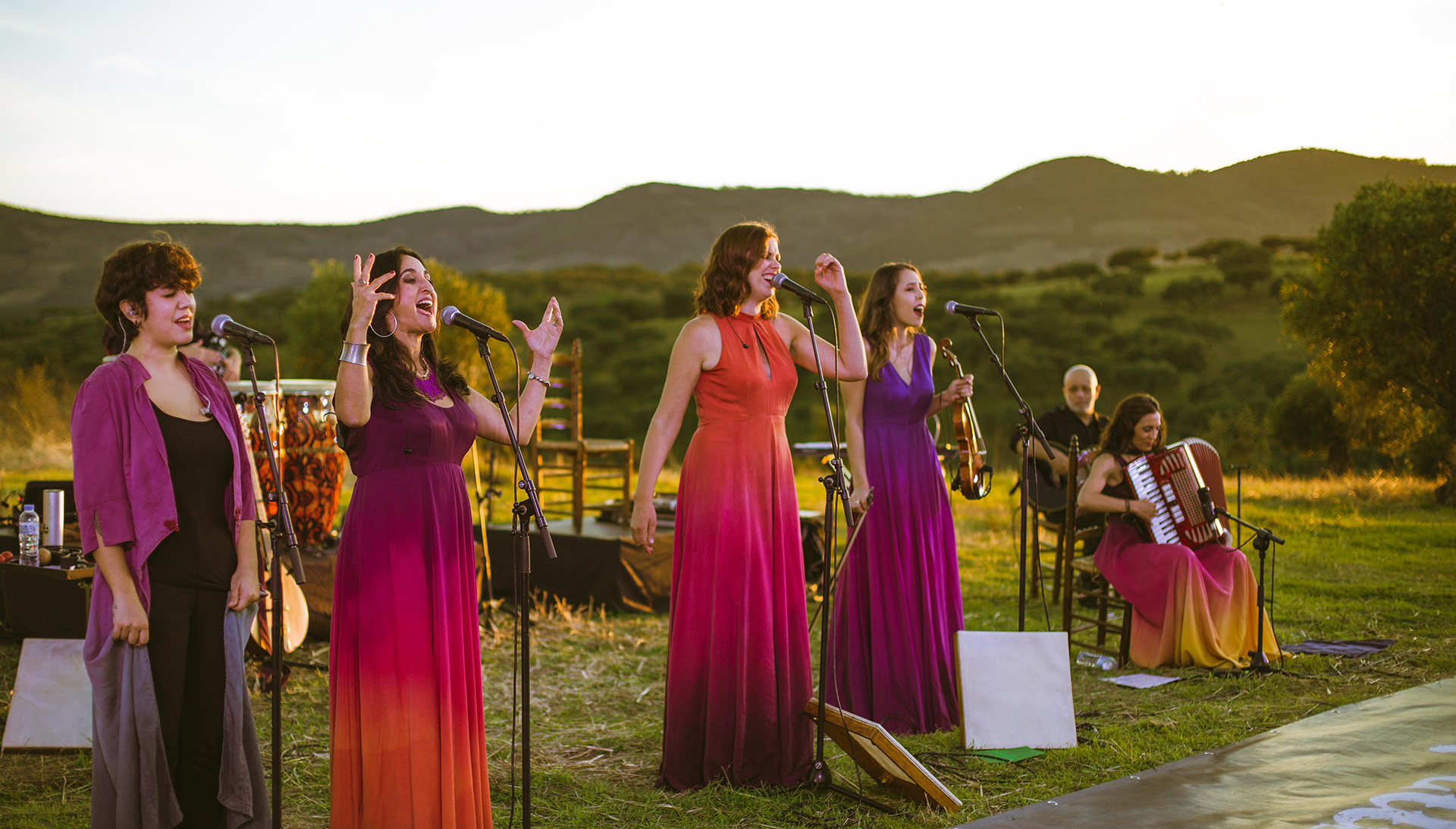
Acetre

Creado en 1976, Acetre es uno de los grupos más veteranos y emblemáticos dentro del panorama folk de Extremadura y su música resulta imprescindible para entender la trayectoria de la música folk de los últimos años tanto dentro de su región como en el resto de España.

Creación y renovación musical sobre una rica base tradicional se unen a su larga experiencia como músicos, para acertar en un engranaje de calidad instrumental y vocal capaz de abrir nuevos horizontes dentro de las músicas inspiradas en las raíces tradicionales.

Su lugar de origen, Olivenza (Badajoz) les otorga la característica “bicultural” de una manera tan espontánea y sencilla que sólo se podría explicar sabiéndose nacida desde lo esencial, desde la base del aprendizaje vital. Así, en sus interpretaciones aúnan perantones, pindongos, tonadas festivas o alboradas extremeñas, con los verdegaios, fados o corridiños portugueses. Una combinación bien aprovechada que da como resultado uno de los sonidos más exquisitos dentro de lo que hoy entendemos como tradición renovada.

Su filosofía artística parte de sentir la música como un lenguaje heredado al que ellos aportan su particular semántica, de interpretarla con una valentía y belleza vocal indiscutibles, con una instrumentación que se codea con sutiles armonías y composiciones que acogen antiguas melodías con una importante dosis de experimentación que abre nuevas sendas a la música de raíz.


fondo-clari5

 
English

Created in 1976, Acetre is one of the most emblematic and experienced groups within the folk panorama of Extremadura. Their music becomes essential in order to understand the direction of folk music in the past few years, not only in their region but also in the rest of Spain.

Starting from a rich traditional base and in union with their great experience as musicians, they have created and renewed music by making the right choice between instrumental and vocal quality, moreover they have been able to open new horizons with music inspired from traditional roots.

Their birthplace Olivenza, (a town rooted in two cultures Spanish and Portuguese) gives them the simple and naturally spontaneous characteristic of being considered as 'bicultural', which can only be explained as growing up and learning with the knowledge and essence of two cultures that are present in everyday life. Therefore in their repertoire they unite perantones, pindongos, tonadas festivas or Extremenian alboradas with verdegaios, Portuguese fados and corridiños. A combination used to great advantage, which as a result gives one of the most exquisite sounds in what we understand as renewed musical tradition.

The artistic philosophy of their music is to be understood as…. an inherited language to which they apply their particular semantics… they interpret them with an indisputable vocal value and beauty. There is an instrumental beauty that coexists with their subtle harmonies and compositions, adopted from old melodies with an important dose of experimentation, opening new doors for traditional music.